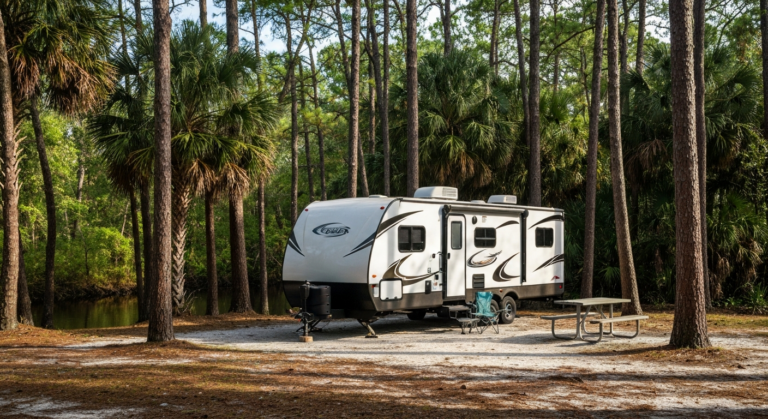
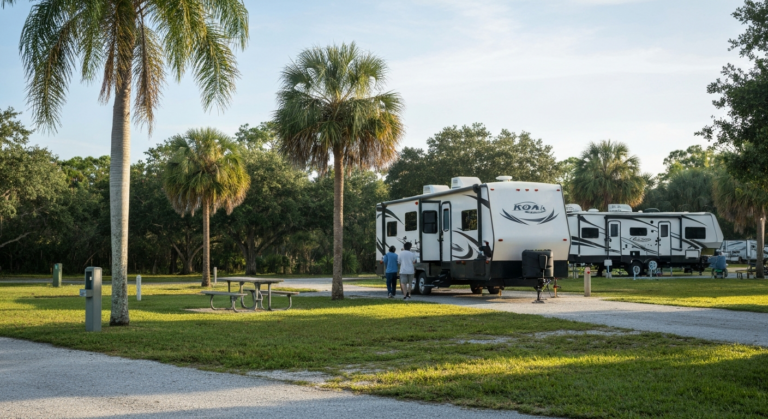
RV Rental Near the Arthur R. Marshall Loxahatchee National Wildlife Refuge — West Palm Beach, FL
I’ve spent years delivering rental RVs all over Palm Beach County, and the Loxahatchee refuge is one of the trips I get most excited to set people up for — right after I make sure they understand one thing. The refuge is a day-use federal wildlife area. There is no camping inside it, no overnight parking, no hookups, and no campfire by the sawgrass. So the play here isn’t “camp in the refuge.” The play is: rent a rig, base it at a real full-hookup campground close by, and day-trip out to the marsh at first light when the birds are up and the heat and bugs haven’t found you yet. Here’s everything I walk people through before I drop a rig off.
Why the Loxahatchee refuge is worth building a trip around
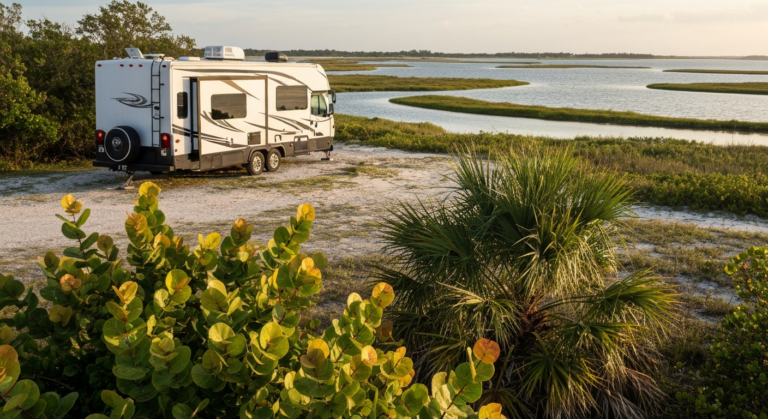
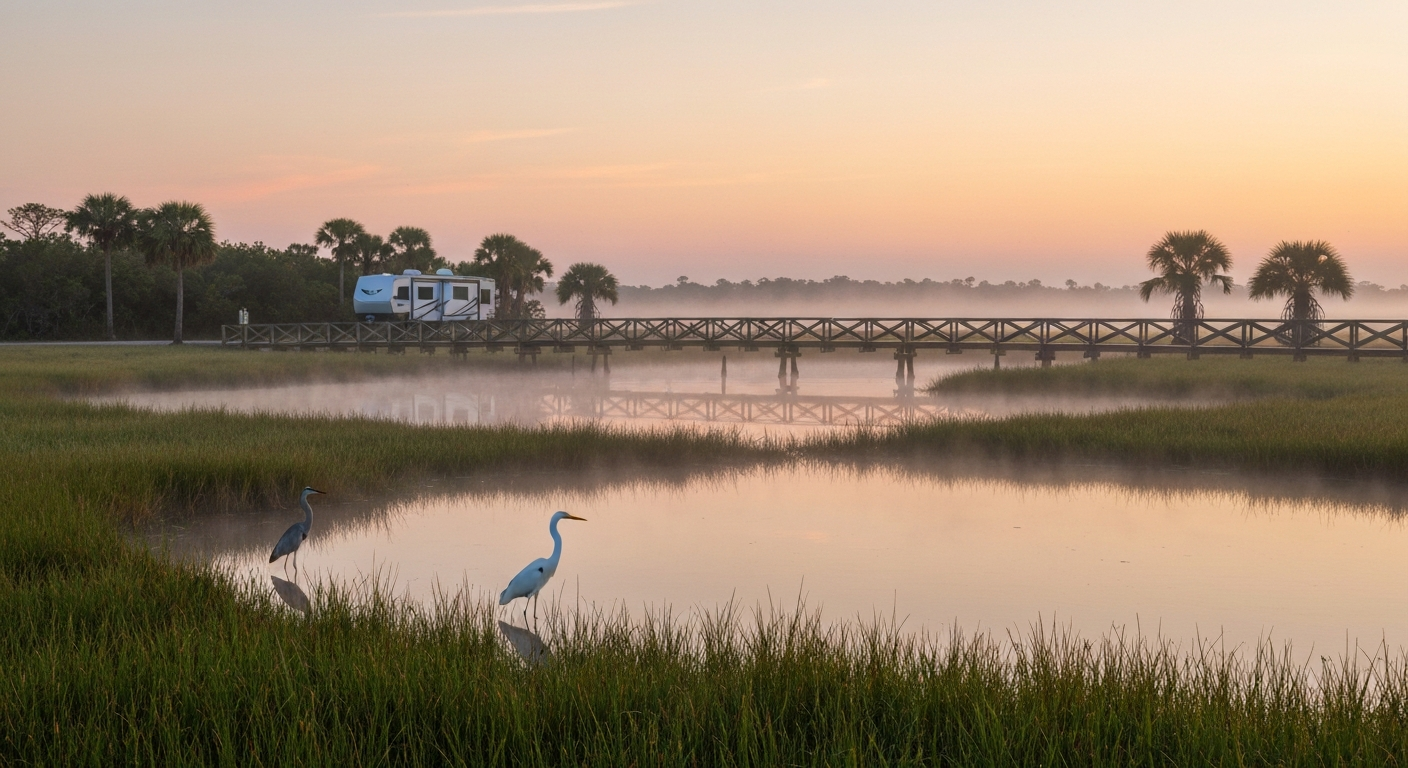
The Arthur R. Marshall Loxahatchee National Wildlife Refuge is the northernmost remnant of the Everglades — roughly 145,000 acres of sawgrass marsh, cypress swamp, and tree islands sitting about 30 minutes south and west of West Palm Beach. The entrance is off US-441/SR-7, west of Boynton Beach and Delray. What you get out there is the real, quiet Everglades without the crowds of the big national park two hours south. It is a birder’s and a photographer’s paradise — herons, egrets, anhingas drying their wings, alligators sliding off the banks — and at sunrise the whole impoundment turns to glass. I tell everyone the same thing: bring binoculars, and get there early. Sunrise out here is genuinely magic.
Where to base your RV nearby (and how I get it there)
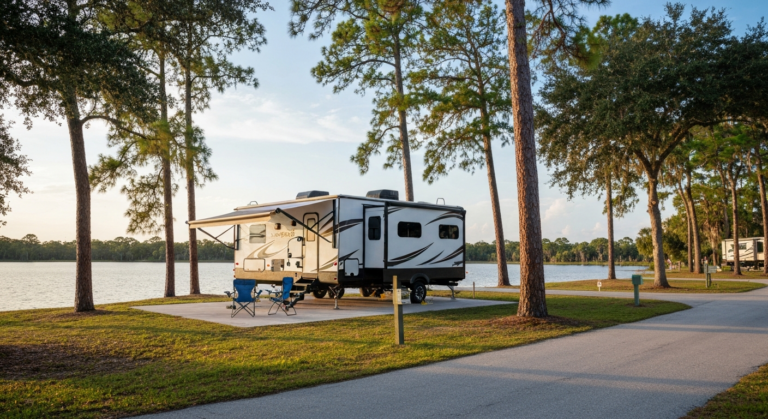
Because you can’t stay in the refuge, you want a campground with power and water within easy reach, and the closest RV base I point people to is John Prince Park in Lake Worth. It’s a county park with a real campground — full hookups, big shade trees, a lake — and from there the refuge entrance is a short, simple drive south and west. You wake up, make coffee in the rig, and you’re standing on the Marsh Trail before the parking lot fills. That’s the whole reason to do it this way: comfort at night, wilderness at dawn. I deliver and set the RV up at the campsite myself, so you never tow a thing or fumble with leveling and hookups — you just show up.
The boardwalk, the Marsh Trail, and the birding
Start at the visitor center to get your bearings, then hit the two things that make this place. The cypress swamp boardwalk is a short, flat loop that takes you up into a shady stand of cypress — cool, quiet, and a totally different world from the open marsh. The Marsh Trail loops along the impoundments and is where the serious birding happens; walk the dikes slowly and you’ll lose count of the wading birds. Both are easy and family-friendly, but the marsh is fully exposed to the sun. That’s the heart of why I push the early-morning visit — by mid-morning in summer it’s a furnace out there with no shade.
Paddling and freshwater fishing
If you want more than walking, the refuge has a canoe and kayak trail winding through the marsh, and freshwater fishing in the impoundments. Paddling here at sunrise, with mist still on the water and an anhinga on a snag ten feet off your bow, is the kind of morning people remember for years. Bring water, sun protection, and patience — this is wild Everglades habitat, so give the alligators their space and keep an eye on the weather, because the afternoon thunderstorms roll in fast from May through October.
South Florida RV reality: heat, bugs, and storms
Let me be honest about the conditions, because it’s why people enjoy the trip instead of just surviving it. South Florida is hot and humid most of the year. Run the AC — that’s what it’s for, and every rig I rent is set up to keep up with our summers. From May through October, count on afternoon thunderstorms that build quick and pass quick; plan your refuge time for the morning and you’ll usually be back at camp before the sky opens. The bugs are real out here by the marsh: no-see-ums and mosquitoes come out at dusk and dawn, so bring good repellent and don’t linger on the dikes after sunset. The sweet spot for the whole region is November through April — cooler, drier, fewer bugs, and the winter bird numbers are unreal. And remember we’re in hurricane season June through November; I keep an eye on the tropics for every booking and I’ll talk you through it if anything’s brewing.
How delivery works
You don’t need to own a truck, know how to back a trailer, or learn the hookups. You pick the rig, I deliver it to your campsite at John Prince Park (or wherever you’re basing), level it, connect power and water, and walk you through how everything works before I leave. When you’re done, I come pick it up. Your only job is to enjoy the refuge at sunrise.
- Go at sunrise — best wildlife, coolest air, fewest bugs on the marsh.
- Base your RV at a full-hookup campground; John Prince Park in Lake Worth is the closest base to the refuge.
- There is no camping in the refuge — it’s day-use only. Day-trip in, sleep at camp.
- Pack binoculars, sun protection, water, and serious bug spray for the no-see-ums.
- Plan refuge time for the morning; let the May–October afternoon storms pass from camp.
- Run the AC — it’s built for our heat and humidity.
- For the best conditions overall, aim for the November–April sweet spot.
- Give the alligators room and stay on the trails and dikes.
Ready to set this up? Take a look and browse the fleet here in the Palm Beaches, and if you’re still deciding where to stay, here’s a rundown of nearby campgrounds and RV parks. Tell me your dates and I’ll get a rig delivered so you can be standing on the Marsh Trail at first light.